
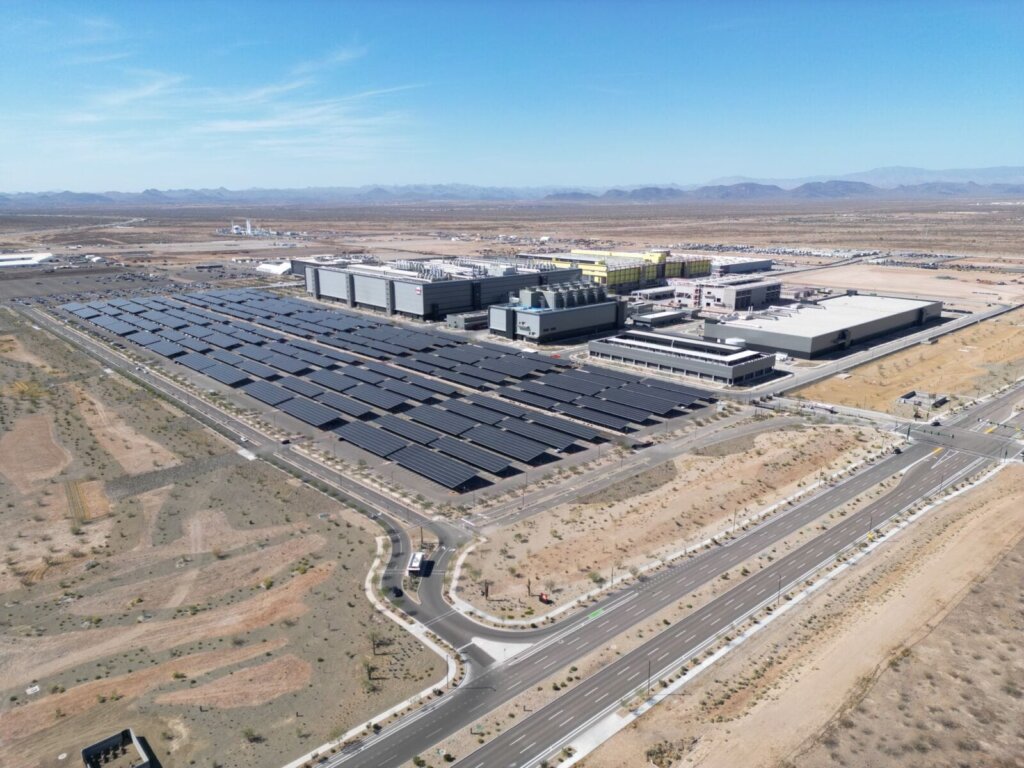
The Big Picture: Investment, Scale, and Why This Site Matters
TSMC’s Arizona buildout is widely described as a “mega-campus”—a cluster of multiple semiconductor fabrication plants (fabs), plus supporting facilities (packaging, R&D, utilities, water recycling, etc.). TSMC confirmed a major expansion plan in 2024, including a third fab and up to $6.6B in CHIPS Act direct funding (plus up to $5B in loan guarantees) tied to the Arizona project.
In January 2025, reporting confirmed 4-nanometer chips began production in Arizona, a meaningful milestone because it signals the campus is moving from “construction story” to “operating employer.”
In March 2025, TSMC announced it intends to expand U.S. investment to $165B, describing additional fabs, packaging, and an R&D center as part of the broader U.S. expansion narrative.
Key Stats: What’s Confirmed (and What’s Been Announced)
Manufacturing technology + production timeline (high level)
- The Arizona site’s first fab is associated with 4nm-class production and was expected to ramp to high volume in 2025 per reporting.
- TSMC’s 2024 announcement stated the third fab is planned to meet customer demand using the most advanced process technology in the U.S.
(Note: specific node targets and dates can shift in semiconductors based on tools, labor, and customer commitments—treat timelines as directional.)
Jobs + economic output (what’s being cited publicly)
- TSMC’s March 2025 release said the expansion is expected to support ~40,000 construction jobs over the next four years and create tens of thousands of high-paying, high-tech jobs over time.
- The same release projects more than $200B of indirect economic output in Arizona and across the U.S. in the next decade.
- The Greater Phoenix Economic Council (GPEC) summarized an April 2024 analysis tied to the first three fabs (at the $65B stage), including estimated $32.9B in economic output over a 13-year period and ~$1.4B in combined direct/indirect tax revenue to Arizona (13-year).
Water + infrastructure (a “desert reality” driver)
- Reporting in 2025 described a TSMC industrial water reclamation plant and cited current use around 4.75M gallons/day with ~65% recycled, and projected ~16.4M gallons/day when three fabs are complete (with a reclamation facility targeted for 2028).
This matters for real estate because large industrial water + power investments typically drive multi-agency infrastructure upgrades (utility corridors, substations, roads) that can reshape nearby land values and future planning.
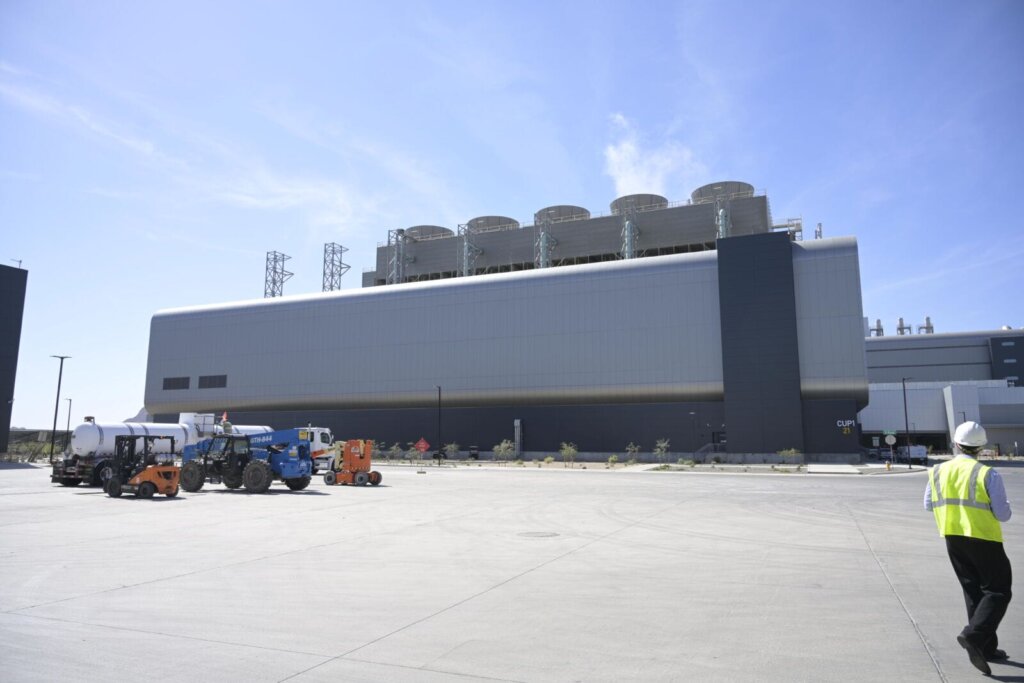
Land Moves: What Current Purchases and Auctions Signal
Land acquisition is one of the clearest signals of long-range intent, because fabs require:
- large setbacks and security buffers,
- redundant utility access,
- room for supplier/support buildings,
- expansion pads for future fabs and packaging.
Recent reporting shows large blocks of North Phoenix land are being positioned for expansion, including a widely reported ~902-acre state land auction tied to the area’s campus growth narrative.
What this can mean: even if fabs come online in phases, the “industrial gravity” of a campus tends to pull in:
- specialty construction,
- tool maintenance and chemical/gas suppliers,
- logistics,
- cleanroom service firms,
- packaging/testing partners.
That ecosystem often arrives as a second wave—after the headline fab announcements.
The “Second Wave”: Supplier Ecosystem and Adjacent Development
Mega fabs don’t operate in isolation. They generate demand for:
- advanced materials and industrial gases,
- equipment installation and service,
- packaging/testing capacity,
- precision logistics,
- training pipelines and workforce housing.
National coverage has increasingly framed Phoenix as a manufacturing construction hub, with TSMC frequently cited as a centerpiece project.
Also noteworthy: Arizona has attracted advanced packaging investment to complement fabs (packaging is a critical part of the chip value chain). Reuters noted U.S. support for packaging capacity in Arizona alongside TSMC’s ramp.
Real estate translation: supplier + packaging growth is often what broadens housing demand from “a few thousand direct fab jobs” to a much larger pool of indirect jobs across skill levels and incomes.
What This Could Mean for North Phoenix Real Estate (10–15 Year Lens)
No one can promise price outcomes, but we can outline the typical pathways large advanced-manufacturing campuses create in housing markets.
1) Housing demand becomes more “employment-anchored”
When a campus moves from construction to operations (as Arizona’s first production milestone suggests), it tends to stabilize demand through economic cycles.
Expected impacts:
- stronger absorption in nearby submarkets,
- more relocation buyers and renters,
- more interest in newer-build communities that match commuting patterns.
2) Rental pressure can rise first, then for-sale follows
Large projects often bring:
- temporary construction workforce housing demand,
- then longer-term engineer/tech/management relocations,
- plus supplier workforce growth.
That sequence often tightens rentals before it fully shows up in resale comps.
3) New retail + services follow rooftops (not the other way around)
As rooftops accumulate, you typically see:
- neighborhood retail expansion,
- medical offices,
- childcare/schools expansion pressure,
- restaurant and service density.
4) Infrastructure improvements can lift certain corridors disproportionately
The biggest “winners” over a decade are often areas that:
- gain easier freeway access,
- benefit from utility upgrades,
- get new employment nodes (supplier parks, distribution, packaging).
5) Premiums may form around “time-to-campus” commutes
Over 10–15 years, buyers often start valuing predictable commute to stable employers more than raw distance. That can create pricing premiums for:
- routes with less bottleneck risk,
- communities with direct access to Loop 303/I-17 nodes,
- areas with expanding amenities (retail, schools, recreation).
Risks and Watch Items (because real markets aren’t one-way)
Even huge projects face variables that can change timing:
- global chip cycles (demand can surge or cool),
- labor availability for specialized trades,
- tooling supply chain,
- power/water buildout pace,
- policy/incentive shifts.
That said, TSMC’s continued public expansion messaging and the scale of projected indirect output are the kinds of signals analysts watch when they model long-run regional demand.
TSMC Arizona Campus: Key Facts at a Glance
📍 Location
- North Phoenix / Deer Valley area
- Near I-17 & Loop 303, providing regional freeway access
💰 Total Investment (Announced)
- Up to $165 billion in U.S. investment planned
- Includes multiple fabrication plants (fabs), advanced packaging, and R&D facilities
🏭 Manufacturing Milestones
- 4-nanometer chips now in production in Arizona
- Additional fabs planned with more advanced nodes
- On-site advanced packaging and R&D capacity anticipated
👷 Jobs & Economic Impact
- ~40,000 construction jobs during build-out phases
- Tens of thousands of permanent high-wage jobs (direct + indirect)
- Estimated hundreds of billions in long-term economic output
💧 Infrastructure Commitments
- Dedicated industrial water reclamation facility
- Targeting 65%+ water recycling
- Major upgrades to power, utilities, and transportation corridors
